يونيو 2020

أخبار أمريكا الشمالية
On June 1, 2020, the US Consumer Product Safety Commission (CPSC) enacted a final rule in the Federal Register determining that certain unfinished manufactured fibers do not contain phthalates and ASTM F963 heavy metals in excess of the specified concentrations under CPSIA. This determination allows that any accessible component parts, which are made with these unfinished manufactured fibers, in children's toys and childcare articles would not be required to have third-party testing done for compliance and certification purposes. The effective date of this rule is July 1, 2020.
These new requirements are codified in the Commission’s regulations at 16 CFR Part 1253 for “Children's Toys and Child Care Articles: Determinations Regarding the ASTM F963 Elements and Phthalates for Unfinished Manufactured Fibers.”
Based on the Toxicology Excellence for Risk Assessment (TERA) Task 17 evaluation, the below unfinished manufactured fibers will not contain the ASTM F963 elements and phthalates in concentrations greater than the specified limits, and therefore third-party testing is not required.
|
Type of Unfinished Manufactured Fibers |
Exemption from Third Party Testing |
|
|
ASTM F963 Elements |
Phthalates |
|
|
Nylon |
✔ |
✔ |
|
Polyurethane (Spandex) |
✔ |
✔ |
|
Viscose Rayon |
✔ |
✔ |
|
Acrylic |
✔ |
✔ |
|
Modacrylic |
✔ |
✔ |
|
Natural Rubber Latex |
✔ |
✔ |
|
Polyester (polyethylene terephthalate, PET) |
X |
✔ |
Under the new rule, unfinished fiber is defined as having no chemical additives (e.g. colorants, flame retardants, etc.) beyond those required to manufacture the fiber.
Even though the third-party testing is exempted, a Children’s Product Certificate (CPC) is still needed.
لمزيد من المعلومات حول هذه القصة
- اتصل بنا : Andy Choi (Senior Manager)
- رقم الهاتف : (852) 3185 8045
- البريد الإلكتروني : regulatoryupdates@qima.com
On May 20, 2020, the U.S. Consumer Product Safety Commission (CPSC) published a direct final rule to approve ASTM F2050-19 and incorporate 16 CFR 1225, which is the Safety Standard for Hand-Held Infant Carriers into the federal regulation. The effective date will be August 3, 2020.
ASTM F2050-19, Standard Consumer Safety Specification for Hand-Held Infant Carriers, is intended to minimize the risk of incidents to an occupant resulting from normal use and reasonably foreseeable misuses or abuse of a hand-held infant carrier. The standard was codified in the Commission’s regulations at 16 CFR Part 1225. This rule will make ASTM F2050-19 the mandatory standard.
ASTM F2050-19 includes several editorial non-substantive changes and two substantive changes.
Substantive Changes
There are two substantive changes in ASTM F2050-19 that impact the safety of hand-held infant carriers, as described below:
In section 3.1.3, the definition of a “hand-held infant carrier” was changed to include “semi-rigid.” This change harmonizes ASTM F2050 with the definition in 16 CFR 1225, and is, therefore, an expansion of the previous standard.
In section 9.2.4, ASTM added a new warning icon (figure 1) and warning statement regarding the fall hazard associated with using the product with a shopping cart. Specifically, the message “Fall Hazard: The carrier can fall from the shopping cart. Do not use on shopping cart,” and a related icon (figure 1) must now appear in the instructional literature for a hand-held infant carrier.
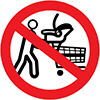
Figure 1 - Pictogram for shopping Cart Warning Non-substantive Changes
A few minor and editorial changes were made throughout ASTM F2050-19 that do not affect the safety of hand-held infant carriers. These include:
In section 1.7, “safety and health” was changed to “safety, health, and environmental.”
Section 1.8 was added, stating that ASTM developed the standard in accordance with principles recognized by the World Trade Organization.
Changes to unit expressions bring the standard into alignment with the ASTM form and style guidelines. For example, the revision added a unit of measurement for each numerical value – “73°F±9°F.” instead of “73 ±9°F” and “minute” changed to “min.”
Minor spelling changes (e.g., “gage” to “gauge” in 7.4.2.1)
Definition for acronyms added (e.g., “EPS (expended polystyrene), EPP (expanded polypropylene)” in note 3).
All of the non-substantive changes made in ASTM F2050-19 are editorial in nature and are neutral regarding safety for hand-held infant carriers.
لمزيد من المعلومات حول هذه القصة
- اتصل بنا : Vivian Chan (Technical Consultant – Toys)
- رقم الهاتف : (852) 3185 8052
- البريد الإلكتروني : regulatoryupdates@qima.com
On May 8, 2020, the US State of Maryland enacted Senate Bill SB447 to amend the State’s Restriction of Flame Retardants Rule for Children's Products and Furniture. The new law will come into force on January 1, 2021, and the Maryland Department of Health will adopt the new requirements starting from June 1, 2021.
According to the bill, the list of restricted flame retardants will be expanded from TCEP and TDCPP to now include all general flame retardants, and children's products and furniture cannot be sold if the products contain more that 0.1% by mass of those flame retardant chemicals.
The following products are exempted from the new law.
A consumer electronic product
A component of upholstered or reupholstered furniture other than cover fabric, barrier material, resilient filling material and decking material
Threads or fibers used for stitching mattress components together
A component of an adult mattress except for foam
لمزيد من المعلومات حول هذه القصة
- اتصل بنا : Andy Choi (Senior Manager)
- رقم الهاتف : (852) 3185 8045
- البريد الإلكتروني : regulatoryupdates@qima.com
In Canada, when hazards are identified in consumer products, they will be recalled and published in the Recalls and Safety Alerts Database on the Health Canada website, which is updated daily. The Canada recalls from October 1, 2019 to May 31, 2020 are summarized below:

|
Hazards |
Frequency |
|
Fire Hazard |
20 |
|
Strangulation Hazard |
16 |
|
Chemical Hazard |
17 |
|
Choking Hazard |
12 |
|
Fall Hazard |
11 |
|
Injury hazard |
13 |
|
Other Hazards* |
39 |
*Other Hazards include Burn Hazard, Crash Hazard, Electric Shock Hazard, Entrapment Hazard, Flammability Hazard, Ingestion Hazard, Impact Hazard, Laceration hazard, Mould Contamination, Overheating Hazard, Tip-over Hazard with a frequency of less than 8.

|
Product Categories |
Frequency |
|
Fabric / Textile / Garment / Home Textile |
20 |
|
Toys and Childcare Articles |
18 |
|
Chemicals |
17 |
|
Furniture |
9 |
|
Other Categories^ |
53 |
^Other Categories include Accessories, Computer / Audio / Video / Other Electronics & Accessories, Cosmetics / Bodycare, Food Contact Material, Home Electrical Appliances (Hair Dryer, Iron, etc.), Household Items, Juvenile Products, Knitting, Lighting Equipment, Outdoor/Recreational Appliance, Sporting Goods / Equipment, Tools with a frequency of less than 8.
For a complete list click here
أخبار أوروبا
In April 2020, the European Committee for Standardization (CEN) published the third amendment to EN 71-7 (i.e. EN 71–7:2014+A3:2020). Any conflicting national standards are to be withdrawn by October 2020. It is expected this standard will be published in the Official Journal of the European Union (OJEU) as a harmonised standard for the Toy Safety Directive (TSD) 2009/48/EC.
The EN 71-7 specifies requirements for the substances and materials, markings, labelling and container to be used in finger paints. There are several important changes included in Amendment 3 for finger paints. See below:
Changing the word “benzo[α]pyrene” to “benzo[a]pyrene”.
Adopting “Commission Regulation (EU) No 231/2012” to replace “Directive 2008/128/EC” (i.e. repealed) in Table A.1 - Organic colourants, which are commonly used in finger paints and Table A.2 – Nonorganic colourants, which are commonly used in finger paints.
Amending the maximum allowable concentration of climbazole (Ref. nr. 22 in Table B.1 – Preservatives) from 0.5% to 0.2%.
Amending the analytical limit of quantitation (LOQ) for benzo[a]pyrene from 0.02 mg/kg to 0.05 mg/kg (Annex F, F.6).
لمزيد من المعلومات حول هذه القصة
- اتصل بنا : Andy Choi (Senior Manager)
- رقم الهاتف : (852) 3185 8045
- البريد الإلكتروني : regulatoryupdates@qima.com
أخبار آسيا
The South Korean Ministry of Trade, Industry and Energy (MOTIE) implemented new chemical requirements in the Common Safety Standards for Children’s Products according to Notice No. 2019-201. The changes came into effect as of June 4, 2020.
The Common Safety Standards for Children’s Products applies to accessible parts of products for children under the age of 13. Several important changes in the standard according to the Notice No. 2019-201 are shown below:
All children’s products are required to comply with the limit of 0.1% as a sum total for the following six phthalates (BBP, DBP, DEHP, DIDP, DINP and DnOP)
Introducing certain exemptions for lead content requirements in textiles, writing instruments and electronic products
Introducing exemptions for cadmium content requirements in textile products
Reducing the lead content requirement in substrates from 300 mg/kg to 100 mg/kg
Introducing new requirements for the total content of n-nitrosamines and n-nitrosatable substances in certain children’s products containing elastomeric materials. For example, soothers, teats and balloons.
The new standard will be implemented in 2 phases. The new phthalates restriction was effective on June 4, 2020 while the remaining new requirements will become effective on December 4, 2020.
لمزيد من المعلومات حول هذه القصة
- اتصل بنا : Andy Choi (Senior Manager)
- رقم الهاتف : (852) 3185 8045
- البريد الإلكتروني : regulatoryupdates@qima.com
اشترك في نشرتنا حول تحديثات القوانين واللوائح
يمكنك إلغاء الاشتراك في أي وقت. اقرأ سياسة الخصوصية الخاصة بنا.